Camping, music festivals, marathons: reasons to own a portable toilet
Outdoor plans rarely fail because of scenery, music, or motivation; they fail when basic comfort is ignored. A portable toilet turns a remote campsite, a pop-up gathering, or a long race-day staging area into a place people can actually enjoy for hours. It reduces stress, limits messy detours, and helps organizers protect hygiene when fixed restrooms are too far away or too few. Even discussions around portable toilet block us 2026 show how fast this simple category is evolving.
Outline
- Why sanitation affects comfort, privacy, and event success.
- How major product types compare in size, cleaning needs, and cost.
- When ownership makes sense for camping, music festivals, marathons, and property use.
- What buyers should know about maintenance, storage, and local disposal rules.
- How future trends, including portable toilet block us 2026, may shape buying decisions.
Why sanitation matters more than most people expect
People often spend weeks choosing tents, coolers, race gear, or speaker systems for an outdoor setup, then treat restroom planning as an afterthought. That is usually the point where comfort begins to crack. A portable toilet is not glamorous, but it solves a basic human need in places where distance, crowds, or timing make permanent facilities unreliable. At a campsite, it can spare a family a midnight walk through rain and uneven ground. At a small event, it can prevent the familiar line that turns a cheerful gathering into a patience test. At a marathon staging area, it can help runners stay focused on preparation instead of logistics.
The value goes beyond convenience. Hygiene matters because poorly managed sanitation can contaminate a site, create odors, and frustrate guests. Event planners commonly use restroom ratios as part of their setup calculations, and many rely on rough rules of thumb such as one unit per 50 to 100 people for several hours, with more capacity added for longer events, alcohol service, or limited nearby facilities. Exact needs vary by venue and local rules, but the principle is steady: when access is too tight, user experience drops quickly.
A portable toilet can also support people with different mobility, health, and family needs. Parents with young children, older adults, and people managing bladder or digestive conditions often experience outdoor trips very differently from those who can simply “wait until later.” The right setup restores dignity and predictability. That matters more than many first-time buyers expect.
- It reduces time lost walking to distant restrooms.
- It improves comfort at night, in bad weather, and in crowded settings.
- It can lower environmental impact when waste is handled properly.
- It gives hosts more control over cleanliness and planning.
There is also a psychological benefit. When people know a restroom is nearby, they relax. The campsite feels less improvised. The race base feels less chaotic. The private field hosting a reunion feels less like an empty patch of grass and more like a functioning venue. In that sense, sanitation is not a side detail; it is part of the architecture of a good experience. The best outdoor memories usually seem effortless, and a well-chosen restroom solution is often one reason why.
Comparing the main types: from compact camping models to modular blocks
Not every buyer needs the same kind of restroom solution, and that is where comparison becomes useful. The phrase portable toilet covers several very different products. Some are designed for a family road trip, some for a remote cabin, and some for major public events. Understanding the differences helps buyers avoid paying for capacity they will never use or, just as important, underestimating what their situation requires.
Compact camping models are the most familiar entry point. These include simple bucket-style systems, folding seats with waste bags, and small flush or cassette units with removable tanks. They are relatively affordable, easy to store, and practical for weekend trips or emergency backup use. Their limits are privacy, capacity, and servicing frequency. A small family may find them perfectly adequate for one or two nights, especially when paired with a privacy tent, but not ideal for a crowded multi-day gathering.
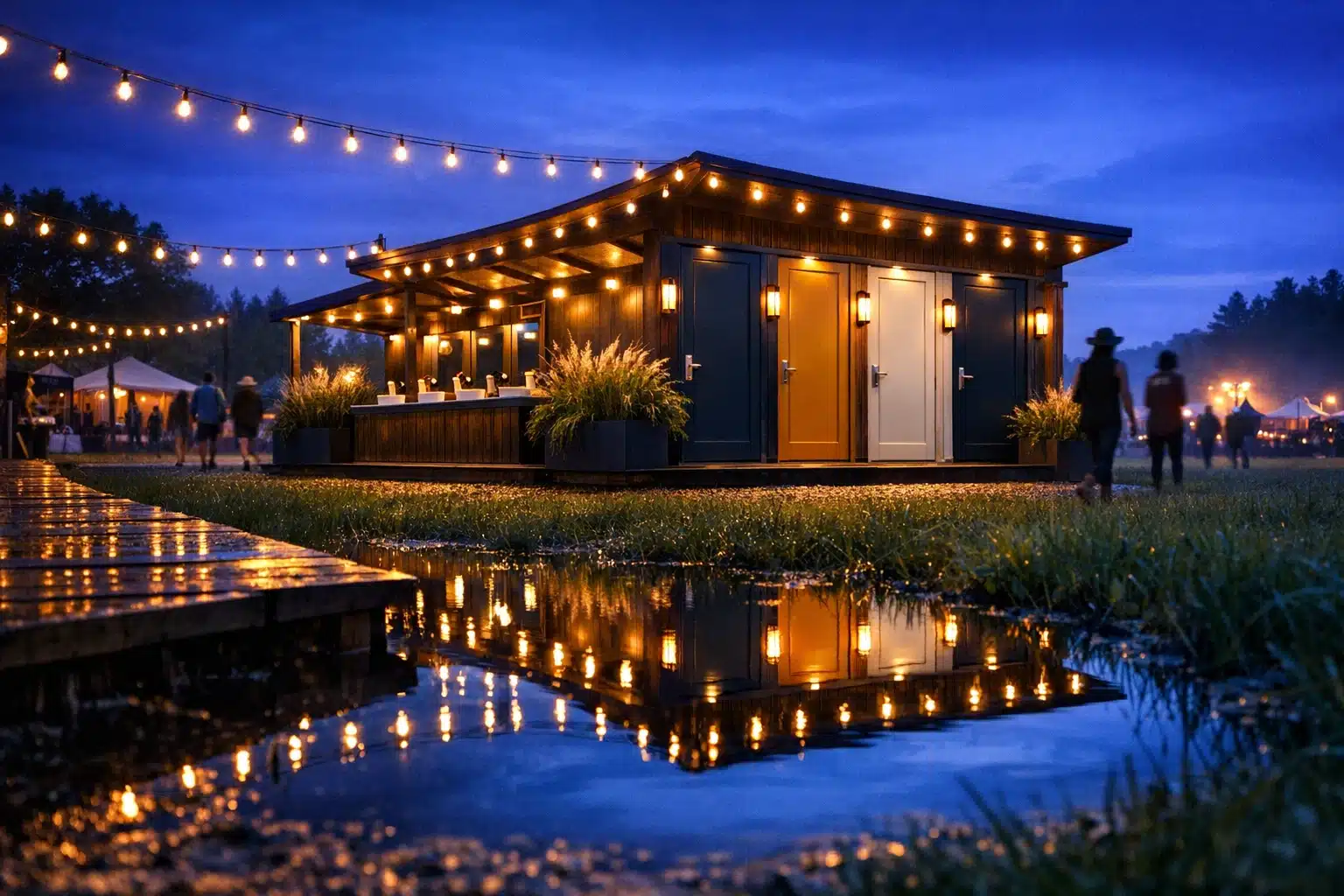
Mid-range portable units bring more comfort. Flush features, better seals, stronger ventilation, and larger tanks make them suitable for longer trips or use on private land. Some owners use them for hunting camps, off-grid building projects, or backyard events where indoor traffic would otherwise overwhelm the house. Above that level are restroom trailers and modular blocks, which are far closer to temporary facilities than simple travel gear. When people refer to portable toilet block us 2026, they are often pointing toward this larger category: grouped stalls, accessible units, handwash stations, lighting, and layouts intended for public-scale demand.
- Compact camping toilet: low cost, easy transport, limited capacity.
- Cassette or flush model: better comfort, moderate size, regular cleaning required.
- Standalone event unit: high capacity, strong privacy, usually serviced professionally.
- Restroom trailer or modular block: premium comfort, high throughput, higher cost and more planning.
The best choice depends on how many people will use the unit, for how long, and with what level of privacy and servicing support. A solo camper may need a lightweight unit that fits in a car trunk. A local sports organizer may need several standalone units plus sinks. A landowner hosting repeated events may benefit from a more durable arrangement. There is no single winner across every case. The smartest purchase is the one that matches frequency, user count, and cleanup reality rather than the one with the longest feature list.
Where ownership makes sense: camping, festivals, marathons, and temporary sites
Ownership becomes attractive when restroom needs repeat often enough to justify the cost and storage space. Camping is the clearest example. Families who prefer dispersed camping, overlanding, or trailer-free weekend trips quickly learn that public restrooms may be closed, poorly maintained, or simply too far away to be practical. A portable toilet changes the rhythm of the trip. Morning routines become easier, nighttime interruptions become safer, and weather matters less. Instead of treating sanitation as a gamble, campers gain a predictable system.
Music festivals create a different case. While large festivals usually provide rented facilities, small private festivals, rehearsal grounds, and community arts events often have patchy infrastructure. If you help run one of these gatherings year after year, ownership can reduce last-minute scrambling. It also lets you control quality. Guests notice whether there is handwashing, whether units are placed sensibly, and whether queues form near peak times. A thoughtful setup can prevent that familiar scene where people miss a favorite performance because the restroom line curls like a tired snake through the field.
Marathons, charity runs, and cycling events also benefit from serious restroom planning. Participants often arrive early, hydrate heavily, and spend concentrated periods near start zones. That creates sharp demand before the event begins and again at the finish. Organizers usually plan capacity by expected attendance and duration, often adding more units when alcohol, food service, or long wait times are likely. For recurring local events, owning a portable toilet or a small fleet may be more efficient than repeated ad hoc arrangements, especially if the organization has storage space and a servicing plan.
Ownership can make equal sense on private property. Home renovations, detached workshops, seasonal farms, and rural lots may need temporary sanitation without routing everyone through the house. During emergencies such as water shutoffs or storm recovery, a stored unit becomes practical rather than optional. In those moments, the product stops feeling like niche equipment and starts feeling like resilience.
- Good candidates for ownership include frequent campers, event hosts, sports clubs, and rural property owners.
- Occasional users may still prefer rental for large gatherings.
- Repeated use usually shifts the value equation toward buying.
The key question is simple: will you face the same sanitation problem often enough that solving it once, properly, saves time and hassle later? For many outdoor users, the answer is yes.
Buying and maintaining one responsibly in the United States
A smart purchase starts with realism. Buyers sometimes focus on appearance or assume all units work in roughly the same way, but ownership costs and effort vary widely. Capacity is the first filter. Small camping models may suit one or two users for short trips, while larger units are better for repeated use on private land or event duty. Tank size, flush style, seat height, ventilation, portability, and privacy all matter. A model that is easy to carry but miserable to clean will not feel like a bargain for long.
Budget also spans a wide range. Basic emergency or camp units may cost well under a few hundred dollars. Better flush or cassette systems often move into the mid-hundreds. Event-grade units, restroom trailers, and modular installations cost much more and usually involve delivery, servicing, and storage planning. For that reason, it helps to estimate total use over a year rather than fixating on purchase price alone. If the unit will be used for multiple trips, family gatherings, and jobsite needs, ownership can compare well with repeated rental fees.
Maintenance is where discipline matters. Waste must be emptied at approved dump stations, RV service points, or other legal disposal facilities depending on the unit type and local regulations. It should never be poured into storm drains, waterways, or ordinary ground areas. Cleaning chemicals should be used according to product instructions, and ventilation components should be checked regularly. If a unit is stored for long periods, seals, latches, and tank condition deserve attention before the next trip.
- Check state and local disposal rules before first use.
- Plan where the unit will be cleaned and dried after emptying.
- Store supplies such as gloves, deodorizer, paper, and sanitizer together.
- Think about winter storage if freezing temperatures are common.
Accessibility can also affect the decision. Public-facing events in the United States may require accessible restroom options, and expectations are higher now than they were a decade ago. That is one reason larger event organizers are paying attention to terms like portable toilet block us 2026: the conversation increasingly includes layout efficiency, inclusive access, handwashing, and easier servicing. In short, a responsible buyer does not ask only, “Can I own this?” but also, “Can I maintain it legally, cleanly, and consistently?” That second question is the one that protects both guests and the site itself.
Conclusion: choosing the right solution for your audience and looking ahead
If you camp often, host outdoor gatherings, manage recurring races, or spend time on property without reliable facilities, owning a portable toilet can be a practical upgrade rather than an unusual indulgence. The right model saves time, reduces stress, and makes outdoor plans feel intentional instead of improvised. For families, it adds comfort and privacy. For organizers, it protects guest experience. For property owners, it creates flexibility during projects, peak visitor days, and emergencies.
The most useful way to decide is to match the product to the pattern of use. A casual camper may only need a compact unit and a privacy shelter. A club that stages several events each season may need sturdier, serviceable units with handwashing support. A venue operator or municipal planner may be better served by modular systems that handle higher volumes. That is where the forward-looking idea behind portable toilet block us 2026 becomes relevant. It points to a market that is moving toward smarter layouts, touchless features, better ventilation, easier servicing, and more comfortable temporary restroom environments. The old stereotype of the bare minimum facility is slowly giving way to something more functional and user-aware.
There is also a broader lesson here. Outdoor comfort is often built from unflashy decisions: shade, water, seating, lighting, waste control, and restroom access. Ignore one of them and the entire experience can wobble. Get them right and people remember the sunset, the concert encore, the finish-line emotion, or the quiet of the woods rather than the inconvenience in between. That is why sanitation deserves a place in planning discussions from the very beginning.
For the target audience of this topic, the path forward is clear. Assess how often you need the unit, how many users you expect, where waste can be disposed of legally, and how much maintenance you can realistically handle. Buy for your actual routine, not for an imaginary extreme scenario. Done well, this is not just another item to pack or store. It is a simple tool that supports cleaner events, calmer trips, and more reliable outdoor living.