Outdoor Pool Design: Where Beauty Meets Functionality
Understanding the Appeal and Article Outline
A backyard pool no longer has to mean months of digging, structural engineering, and a budget that feels like a second mortgage. Today’s market offers stylish, practical options that can be assembled in days, sometimes even in a single weekend, making summer comfort far more accessible. For families, renters with permission, and homeowners who value flexibility, Easy to Install Outdoor Pools bring together recreation, visual appeal, and manageable upkeep in one smart upgrade.
The growing interest in simple pool solutions is easy to understand. People want outdoor spaces that work hard without becoming high-maintenance projects. A well-chosen pool can cool down a small yard, create a focal point for gatherings, and encourage more time outside. At the same time, rising construction costs have made permanent in-ground pools less realistic for many households. Above-ground systems, inflatable designs, steel-frame models, plunge pools, and compact modular kits now fill that gap. They offer practical alternatives for buyers who want convenience, not a season-long construction site.
There is also a design shift worth noting. Outdoor living has become less about oversized installations and more about spaces that feel intentional. A pool that fits the scale of the yard often looks better than one that overwhelms it. In that sense, convenience and beauty are not opposing ideas. A pool can be quick to install and still support a polished landscape, a clean patio layout, or a cozy family retreat.
This article is organized to move from planning to ownership, so readers can make decisions in a logical order. The outline includes:
- how to compare the main types of easy-install pools
- what to check before choosing a location and starting setup
- which design elements improve both appearance and everyday comfort
- what realistic costs and maintenance tasks to expect over time
By the end, the goal is not simply to recommend a product category. It is to help readers match a pool to their budget, available space, climate, and routine. That is where the smartest outdoor design begins: not with the biggest splash, but with the best fit.
Comparing Pool Types That Are Fast to Set Up
Not every pool marketed as simple is equally practical, and the right choice depends on how long you want it to last, how often it will be used, and how much work you are willing to do before the first swim. When people research Easy to Install Outdoor Pools, they are usually looking at a few main categories: inflatable pools, soft-sided frame pools, rigid above-ground pools, stock-tank style pools, and compact modular plunge pools. Each serves a different kind of backyard and lifestyle.
Inflatable pools are the fastest to deploy and often the least expensive. Many family-sized models cost between about 100 and 600 dollars, depending on size and included accessories. They are ideal for occasional use, young children under supervision, and households that want something seasonal rather than permanent. Their weakness is durability. Punctures, sun wear, and weaker filtration systems mean they are better for light use than for a full summer routine.
Soft-sided frame pools are a major step up. These models typically use a metal or resin frame with a reinforced liner, giving them more stability and better water capacity. They can often be assembled in one to three days, especially in medium sizes. Prices commonly range from roughly 500 to 3,000 dollars. They offer a nice middle ground between convenience and performance, which is why they are popular with families who want repeated use without committing to full construction.
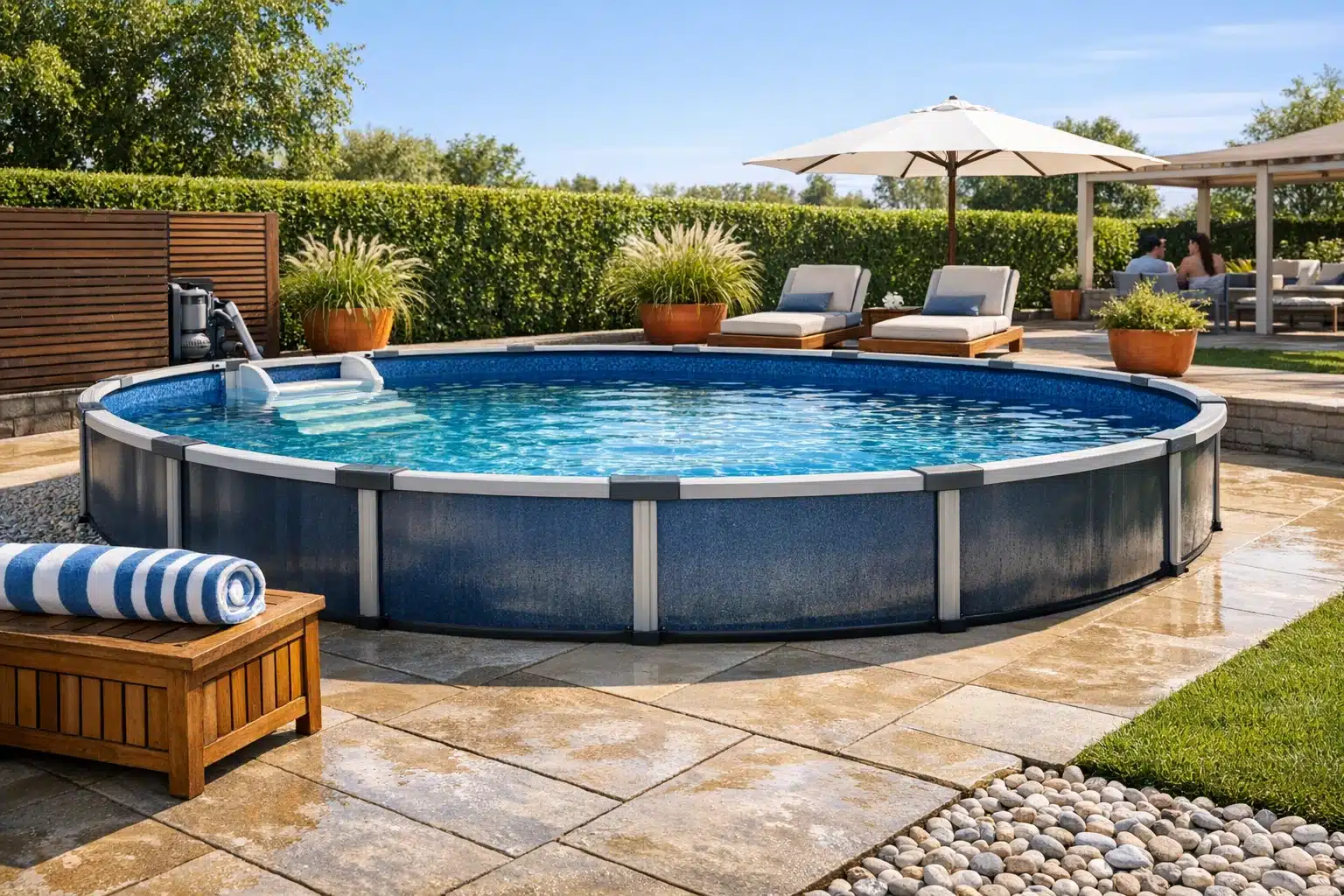
Rigid above-ground pools, especially resin or steel-wall systems, are more structured and durable. Installation is still simpler than an in-ground build, but site preparation matters much more. These can feel surprisingly refined once surrounded by decking or landscaping. Modular plunge pools push the design quality further, though they cost more and may require delivery equipment or professional help.
A useful comparison looks like this:
-
Inflatable pools: lowest cost, fastest setup, shortest lifespan
-
Frame pools: balanced price, stronger structure, family friendly
-
Rigid above-ground pools: better long-term value, more prep required
-
Stock-tank pools: compact, stylish in small spaces, limited swimming room
-
Modular plunge pools: design-forward, compact luxury feel, higher upfront cost
The best option is rarely the largest one. A smaller pool with strong filtration, good access, and thoughtful placement often delivers more enjoyment than a bigger model squeezed awkwardly into the yard. When comparing choices, it helps to think beyond the purchase itself and imagine the pool in daily life: where towels will hang, where shade will fall, and how easy it will be to keep the water clear after a windy afternoon.
Planning the Space and Getting Installation Right
A pool may arrive in boxes, but a good result starts with the ground beneath it. Site planning is the part many buyers underestimate, and it often determines whether the installation feels smooth or frustrating. Even Easy to Install Outdoor Pools need a flat, stable, and well-considered location. A rushed setup on uneven soil can lead to wall stress, poor water balance, drainage problems, and a pool that always looks slightly off, no matter how attractive the model is.
The first priority is level ground. Water is heavy, with a cubic meter weighing about 1,000 kilograms. Even a modest pool can hold several tons. That is why most manufacturers insist on minimal slope tolerance. A yard that looks flat to the eye may still need grading, compacting, or a base layer of sand and protective padding. Grass should be removed beneath the footprint, and sharp stones or roots should be cleared to protect the liner.
Location affects comfort as much as structure. A smart installation area usually considers:
-
sun exposure for warmer water and better swimming conditions
-
distance from trees that drop leaves, pollen, or sap
-
access to electricity for pumps and filters through safe, code-compliant outlets
-
drainage patterns so rainwater does not collect around the pool base
-
proximity to the house for supervision, convenience, and visual connection
Before installation, homeowners should also check local rules. Some municipalities treat deeper or larger above-ground pools similarly to permanent structures, which can trigger permit, barrier, or fencing requirements. In many areas, safety laws apply based on water depth rather than whether the pool is temporary. That step may not feel exciting, but it is far easier to confirm regulations in advance than to correct a setup later.
The installation process itself is usually manageable when broken into stages: prepare the base, assemble the frame or wall system, position the liner, connect the pump and filter, fill gradually while adjusting alignment, and test the water chemistry once circulation begins. For chemistry, a basic target often includes a pH between 7.2 and 7.8 and free chlorine in the recommended range for the sanitation method used. Those numbers matter because clear water is not always balanced water.
There is a quiet satisfaction in a properly installed pool. The frame sits square, the waterline looks even, and the whole setup feels as if it belongs there. That sense of order is what turns a practical purchase into a usable outdoor feature.
Designing for Comfort, Safety, and Visual Balance
A pool should not look like an afterthought dropped into the middle of the yard. Good outdoor design works like a conversation between features, with the pool, seating, planting, pathways, and shade each playing a role. This is where Easy to Install Outdoor Pools can surprise people. With the right surroundings, even a simple above-ground model can feel cohesive, inviting, and tailored to the home.
Start with circulation. People need to move around the pool easily without crossing muddy grass, squeezing past furniture, or dragging water through the whole yard. Deck tiles, gravel borders, pavers, or a small surrounding platform can define the pool zone and reduce mess. These additions also improve safety by creating steadier footing near entry points. If children or older adults will use the pool, wide steps, handrails, and slip-resistant surfaces deserve special attention.
Visual balance matters too. A round pool often softens an angular yard, while a rectangular pool can reinforce clean modern lines. In compact gardens, a stock-tank or plunge-style pool may look more intentional than a wide family pool that consumes every spare meter. Landscaping helps bridge the gap between structure and setting. Ornamental grasses, low shrubs, potted plants, and privacy screens can reduce the utilitarian look many temporary pools have when left bare.
Useful design features include:
-
shade from pergolas, umbrellas, or sail canopies to make midday use more comfortable
-
storage benches or deck boxes for toys, nets, and chemicals
-
screening panels to hide pumps, hoses, or filter equipment
-
warm lighting for evening atmosphere and safer access after dark
-
nearby seating so the pool supports social time, not just swimming
Beauty also has a practical side. A windbreak can reduce debris in the water. A darker liner can sometimes absorb more warmth from the sun. A cover reel or easy-access storage makes owners more likely to use the cover regularly, which helps with evaporation, cleanliness, and heating efficiency. In other words, the most attractive setup is often the one designed around habit.
Think of the finished space as a summer room without walls. Water becomes the centerpiece, but not the whole story. When the pool works with the yard instead of competing against it, the result feels calmer, smarter, and much more enjoyable over the long run.
Costs, Maintenance, and the Best Fit for Real Households
The purchase price is only the opening chapter. To choose wisely, buyers need to look at the full ownership picture: setup materials, filtration, chemicals, covers, electricity, water use, and seasonal storage or winterization. Easy to Install Outdoor Pools are appealing partly because they reduce construction expense, but the ongoing costs still shape whether the experience feels rewarding or burdensome.
For a small inflatable pool, seasonal ownership can remain fairly modest, especially if filtration needs are limited. A stronger frame pool or rigid above-ground model usually adds costs for a better pump, replacement cartridges or sand, a ladder, a ground cloth, a cover, and test supplies. Many households also invest in accessories after the first few weeks because real use reveals real needs. A skimmer, vacuum, solar cover, shade solution, and storage bench can quickly become part of the functional setup.
Maintenance is not difficult, but it is regular. In warm weather, pool owners typically need to skim debris, check chemistry two or three times per week, clean the filter on schedule, and monitor water level. During heavy use or after rain, attention may need to increase. A neglected small pool can become unpleasant faster than a larger system with robust circulation, so convenience should include upkeep, not just assembly time.
A realistic maintenance routine often includes:
-
testing pH and sanitizer levels consistently
-
running the pump for the recommended daily period based on pool size and temperature
-
brushing and vacuuming to prevent buildup on walls and floor
-
using a cover to reduce leaves, evaporation, and heat loss
-
emptying, storing, or winterizing the pool correctly at season’s end
For the target audience, the best pool is the one that matches real life. Busy families may value a durable frame pool that can handle frequent use. Design-conscious homeowners with limited space may prefer a compact plunge-style setup with strong visual appeal. Budget-focused buyers may start with a simpler option and upgrade accessories over time. None of these choices is automatically better than the others.
The strongest conclusion is practical: choose the pool you can install safely, maintain consistently, and enjoy often. When selected with clear expectations, Easy to Install Outdoor Pools offer more than a quick summer purchase. They create a flexible outdoor feature that can support play, relaxation, and thoughtful backyard design without demanding the cost or permanence of a full-scale build.