 Artificially generated image
 Hanging Lanterns Can Instantly Transform the Mood of Any Space
Hanging lantern décor sits at the crossroads of lighting and storytelling, which is why it can change a room faster than many larger, costlier updates. A single lantern over a dining table can make everyday meals feel intentional, while a cluster in a hallway can turn a pass-through space into a visual pause. Because lanterns bridge classic craft and modern function, they fit farmhouses, city apartments, patios, and minimalist homes with surprising ease. Understanding how scale, material, height, and bulb warmth work together helps decorators create atmosphere instead of clutter.
Article Outline
This guide moves from big-picture design ideas to practical decisions, so readers can understand both the beauty and the logic behind hanging lantern décor.
- The visual role lanterns play in shaping mood and style
- How to choose the right size, finish, material, and light quality
- Where hanging lanterns work best in different rooms and outdoor areas
- Styling methods that make lanterns feel integrated rather than random
- Installation, safety, upkeep, and a concluding guide for everyday decorators
The Design Power of Hanging Lanterns in Modern and Traditional Spaces
Hanging lanterns are unusual in the best way: they behave like lighting, but they also function like architecture. Even when switched off, they mark volume, frame sightlines, and give a room a clear visual anchor. That dual role explains why they remain popular across very different styles of home. In a rustic interior, a lantern with dark metal and seeded glass can feel grounded and familiar. In a contemporary room, a cleaner geometric frame in matte black or brushed brass can read as sculptural rather than nostalgic. The form stays recognizable, yet the finish and detailing completely shift the message.
Compared with standard pendant lights, lanterns usually feel more open and airy because many designs use exposed frames instead of heavy opaque shades. That openness matters in smaller rooms where visual weight can quickly become overwhelming. A bulky chandelier may dominate a modest breakfast nook, while a well-scaled lantern preserves lightness without disappearing into the background. On the other hand, lanterns often feel more substantial than a simple globe pendant, which makes them useful when a space needs definition. They are especially effective in transitional interiors, where homeowners want warmth and character without committing to ornate traditional décor.
Part of their appeal comes from the way they shape atmosphere. Lanterns cast light through glass, metal bars, woven fibers, or open frames, and each construction changes the mood. Clear glass feels crisp and bright. Frosted or seeded glass softens the glow and adds a gentle texture. Open-sided lanterns can create delicate shadow lines on ceilings and walls, which gives a room a sense of movement even when nothing else changes. It is a small theatrical effect, but a powerful one. A hallway that once felt purely functional can suddenly feel curated, as if the home has paused to clear its throat before the next room begins.
Lanterns also bridge indoor and outdoor design more easily than many other fixtures. The same design language can flow from an entryway to a porch or from a dining area to a covered patio, creating continuity that makes a property feel more considered. This is one reason designers often use them near thresholds such as foyers, mudrooms, or French doors. They reinforce transition.
Several qualities explain why hanging lantern décor remains versatile:
- It works across farmhouse, coastal, industrial, traditional, and modern styles.
- It provides decorative structure even before the bulb is switched on.
- It can be formal enough for dining rooms and relaxed enough for porches.
- It blends easily with natural materials like wood, linen, stone, and rattan.
In practical terms, lanterns succeed because they are expressive without being difficult. They give a room identity quickly, and that makes them one of the most efficient décor choices for anyone trying to refresh a space without redesigning it from the floor up.
Choosing the Right Lantern: Size, Material, Finish, and Light Quality
A beautiful lantern can still feel wrong if its scale or finish ignores the room around it. Selection starts with proportion. In many dining settings, designers use a fixture that spans roughly one-half to two-thirds of the table width, because that range tends to feel balanced without crowding diners. Over a table, the bottom of the lantern commonly hangs around 30 to 36 inches above the surface, though ceiling height and sightlines may justify slight adjustments. In open walkways, clearance matters more than drama, and keeping the fixture high enough for comfortable movement is essential. A lantern that looks great in a showroom can become a daily annoyance if it cuts into visual or physical space at home.
Material is the next major decision, and it changes both style and maintenance. Metal lanterns are the most adaptable. Iron and blackened steel feel grounded, architectural, and often slightly industrial. Brass and antique gold bring warmth and pair especially well with cream walls, oak furniture, and softer textiles. Wood lanterns or wood-look frames introduce rustic charm, but they need thoughtful pairing so the room does not become too themed. Woven or rattan lanterns create an easy, breezy look that suits coastal, bohemian, and casual contemporary interiors. They are excellent at softening hard surfaces, though they usually cast more diffused and decorative light than task-oriented illumination.
Glass deserves equal attention. Clear glass offers the brightest output and shows the bulb clearly, which is ideal if you want a candle-style bulb to be part of the look. Seeded glass scatters light slightly and brings texture. Frosted glass produces a more muted effect and can hide the bulb better, which some homeowners prefer in bedrooms or reading corners. Open-frame lanterns have no glass at all, and they often feel the lightest visually. That can be an advantage in compact spaces or over kitchen islands where too much enclosure might make the room feel busy.
The bulb itself is where function finally catches up with appearance. Warm white bulbs in the 2200K to 3000K range generally create the coziest effect for homes, while cooler light can make a lantern feel more utilitarian than inviting. LED bulbs are usually the most practical choice because they use less energy and often last far longer than traditional incandescent options, with many models rated for thousands of hours. Dimmable bulbs add flexibility, especially in dining rooms, bedrooms, and patios where mood shifts throughout the day. If color accuracy matters, such as in kitchens or craft-oriented spaces, bulbs with a Color Rendering Index of 80 or above are a sensible baseline.
When comparing options, it helps to think in layers:
- Size: match the lantern to furniture and ceiling height, not just the empty room.
- Material: choose a finish that echoes nearby hardware, frames, or furniture legs.
- Glass or openness: decide how soft, bright, or exposed you want the light to feel.
- Bulb temperature: warmer tones usually support a more welcoming atmosphere.
The right lantern is not simply the prettiest one. It is the one whose scale, surface, and glow all speak the same design language as the room around it.
Where Hanging Lanterns Work Best: Room-by-Room Placement Ideas
Placement is where hanging lantern décor shifts from attractive object to successful design tool. The same fixture can feel elegant in one spot and oddly intrusive in another, so context matters. Entryways are among the strongest locations because they benefit from a clear focal point. A hanging lantern in a foyer can make the home feel intentional from the first step inside. In a two-story entry, a larger lantern often works beautifully because the vertical space can handle more scale. In a smaller foyer, a compact open-frame lantern can preserve lightness while still giving the entrance personality.
Dining rooms are another natural fit. A lantern above the table anchors the gathering point and helps define the room even in open-plan layouts. In these settings, the fixture is not only decorative; it organizes the experience. It tells the eye where the meal happens and where conversation settles at the end of the day. Kitchens can also benefit, especially above islands. Instead of using one oversized fixture, many homeowners choose two or three smaller lanterns in a line. This approach spreads light more evenly and often looks cleaner over long counters. Odd-number groupings can feel casual and balanced, though the island length should guide the final count.
Living rooms require a little more caution. If the ceiling is low, a hanging lantern can compete with sightlines or feel too heavy over a seating area. But in rooms with enough height, especially those with exposed beams or vaulted ceilings, lanterns can add shape and drama that recessed lighting simply cannot provide. Bedrooms are an underrated option. Replacing a standard ceiling light with a smaller lantern can make the room feel layered and personal, especially when paired with bedside lamps for softer evening illumination. Bathrooms can work too, but only if the fixture is rated for the moisture level of the space. Damp-rated or wet-rated products are important in bathrooms, covered porches, and exposed outdoor areas.
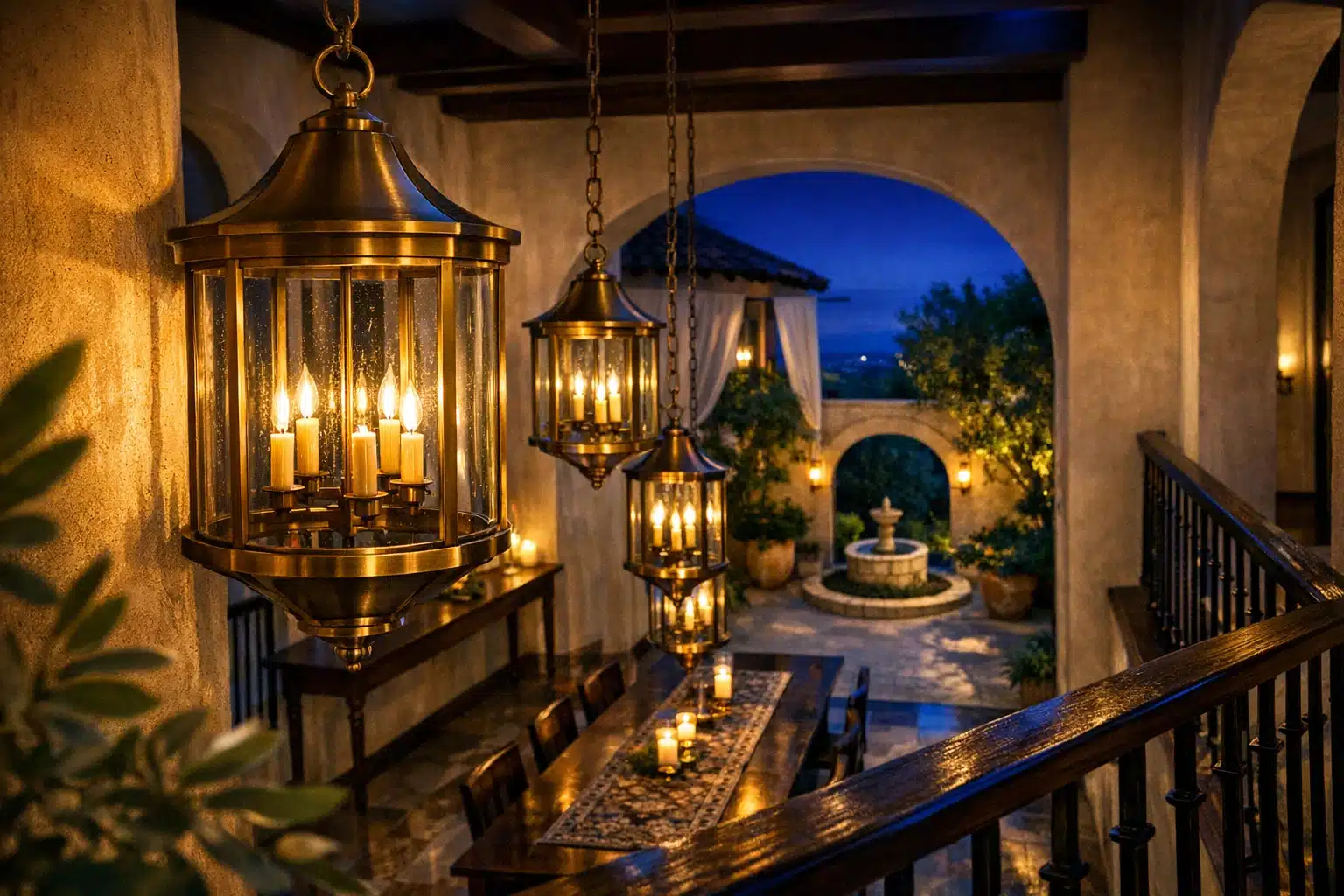
Outdoor placement opens even more possibilities. Covered patios, front porches, pergolas, and garden seating areas all benefit from lanterns because they reinforce the idea of arrival and pause. One lantern by a front door adds welcome. Two flanking a covered outdoor dining zone create symmetry. A row of smaller hanging lanterns under a patio roof can make an evening setting feel warm without becoming theatrical. For exterior use, product ratings matter as much as appearance. A dry-rated indoor lantern may corrode, warp, or fail if exposed to humidity or rain.
Useful placement principles include:
- Keep the bottom of lanterns high enough in circulation zones for safe clearance.
- Use dining tables and islands as visual anchors when deciding fixture position.
- Choose damp-rated or wet-rated fixtures for moisture-prone locations.
- Repeat lantern finishes across adjoining spaces for continuity rather than exact matching.
Good placement is less about copying a trend and more about understanding how people move, gather, and rest in each area. When that rhythm is respected, lanterns feel natural instead of staged.
Styling Hanging Lantern Décor with Color, Texture, and Layered Lighting
Once the lantern is chosen and placed well, styling determines whether it feels integrated or isolated. A hanging lantern should not look like it landed in the room by accident. It needs visual conversation with nearby materials, colors, and shapes. The easiest way to create that conversation is through repetition. If the lantern has a black frame, for example, nearby picture frames, curtain rods, or chair legs can quietly echo that finish. If it uses warm brass, the room might include similar tones in cabinet hardware, mirror frames, or table accents. The match does not need to be exact. In fact, slight variation usually feels more collected and less showroom-perfect.
Texture matters just as much as finish. A metal-and-glass lantern can feel crisp and structured, so it often benefits from the company of softer elements such as linen curtains, woven baskets, wool rugs, or upholstered chairs. A rattan lantern, by contrast, already brings texture and may need cleaner surrounding lines to avoid visual overload. This balance is the secret to using statement pieces without letting them dominate. Think of the lantern as one instrument in a room-wide arrangement, not the entire song.
Layered lighting is another major factor. A lantern rarely does its best work alone. It can provide ambient light, but most rooms feel more comfortable when overhead light is supported by table lamps, sconces, floor lamps, or under-cabinet lighting. This reduces glare, adds depth, and allows the lantern to contribute mood instead of carrying the full burden of function. In a dining room, for example, a dimmable lantern may set the tone while candles or wall sconces soften the perimeter. On a patio, a central lantern can pair with low landscape lights or small portable lamps to create a more nuanced evening scene.
Styling also benefits from restraint. Lanterns already have shape, frame, and presence, so the surrounding décor should leave breathing room. Too many competing focal points make the space feel noisy. Common mistakes include choosing a lantern that is too ornate for the rest of the room, adding multiple other bold fixtures nearby, or ignoring the visual weight of chains and rods. Even hardware can influence the final look. A slim downrod feels cleaner and more modern, while a chain introduces softness and traditional character.
Helpful styling habits include:
- Repeat a lantern finish in two or three smaller places around the room.
- Pair structured lanterns with softer fabrics for balance.
- Use dimmers and secondary light sources to create layered illumination.
- Leave enough negative space so the fixture can be noticed without shouting.
- Consider seasonal updates through nearby textiles or greenery rather than changing the fixture itself.
At its best, styling with lanterns feels effortless, but that ease usually comes from careful editing. The goal is not to impress the eye with volume. It is to guide the eye with rhythm, contrast, and a glow that feels right at home.
Installation, Safety, and Maintenance for Long-Lasting Results
A hanging lantern can look timeless, but the practical side of ownership deserves just as much attention as the decorative one. Before installation, it helps to decide whether the lantern is hardwired, plug-in, battery-powered, or solar if used outdoors. Hardwired lanterns generally provide the cleanest finish and the most permanent solution, especially in entries, dining rooms, and kitchens. Plug-in options can work well for renters or for spaces where rewiring is not realistic, but cord management becomes part of the styling equation. Outdoor solar lanterns have improved in recent years and can be useful for ambience, though they usually do not replace dependable electrical lighting where bright illumination is needed.
Weight support is a serious consideration. Larger lanterns are often heavier than they appear, especially those made with thick metal or multiple glass panels. The ceiling box and mounting hardware should be rated to support the fixture properly, and when there is any uncertainty, a qualified electrician is the safest choice. This is particularly important in older homes, vaulted ceilings, and exterior applications where weather exposure adds stress over time. Local building codes may also affect placement and installation details, so it is wise to check them rather than rely on guesswork.
Safety also involves bulb choice and environment. In enclosed lanterns, bulbs should match the manufacturer’s recommended wattage or LED equivalent, because excess heat can shorten the fixture’s life and create avoidable risk. In bathrooms, porches, and patios, moisture ratings matter. Dry-rated fixtures are intended for indoor spaces without significant humidity. Damp-rated fixtures can usually handle covered areas and bathrooms. Wet-rated fixtures are designed for direct exposure to weather. Choosing the correct rating is not just a technical box to tick; it protects both appearance and performance.
Maintenance is refreshingly simple when done regularly. Dust dulls the frame and reduces brightness, especially on glass panels. A soft microfiber cloth used every few weeks can prevent buildup, while occasional deeper cleaning keeps metal finishes and glass clear. Seeded or textured glass may hide fingerprints better than clear glass, but it still benefits from gentle care. Outdoor lanterns near the coast may need more frequent attention because salt air can wear down finishes faster. Chains, hooks, and connectors should also be checked periodically for wear or looseness.
A practical upkeep routine can include:
- Dusting frames and bulbs often to maintain light quality.
- Cleaning glass panels with a non-abrasive cleaner when needed.
- Checking outdoor fixtures for corrosion, water intrusion, or finish fading.
- Replacing bulbs in matched color temperatures to preserve a consistent look.
- Reviewing fasteners and hanging hardware during seasonal home maintenance.
The best lantern décor is not only attractive on installation day. It keeps performing month after month, asking for very little beyond sensible care and responsible setup. That combination of beauty and usability is part of what makes the category so enduring.
Conclusion: A Practical Decorating Guide for Homeowners, Renters, and Design Enthusiasts
If you are considering hanging lantern décor, the smartest approach is to think beyond the fixture itself and focus on the experience you want the space to create. Do you want an entryway that feels welcoming, a dining room that feels more intimate, a patio that draws people outside after sunset, or a bedroom with a calmer ceiling line than a standard flush mount can offer? Once that intention is clear, the decisions become easier. Size follows scale. Material follows the room’s character. Bulb warmth follows the mood you want at night.
For homeowners, lanterns offer a strong return in visual impact because they can redefine a room without requiring major construction or a full furniture overhaul. For renters, plug-in or lightweight hanging options can still bring the same sense of personality and focus, even when hardwiring is off the table. For design enthusiasts who enjoy refining a space over time, lanterns are flexible enough to move between styles. Change the surrounding textiles, swap nearby hardware, or adjust bulb tone, and the same lantern can feel newly relevant again.
The most useful takeaway is simple: choose with purpose, not just preference. A lantern that looks beautiful online may disappoint if it ignores ceiling height, furniture width, moisture conditions, or the rest of the room’s visual language. By contrast, a carefully selected lantern often looks better in real life than it did in the product photo, because it begins to interact with shadows, surfaces, and daily routines. It becomes part of how the space lives.
If you want a clear starting point, use this quick checklist:
- Measure the room, ceiling height, and furniture below the fixture.
- Pick a material and finish that connect with existing décor.
- Choose warm, dimmable lighting when comfort matters most.
- Confirm the correct rating for indoor, damp, or outdoor use.
- Style the lantern with supporting textures and secondary light sources.
Hanging lanterns work so well because they do more than light a room. They frame moments, soften transitions, and give ordinary spaces a little ceremony. For readers trying to make a home feel more layered, welcoming, and memorable, that is exactly what good décor should do.